In short: pay more when the product stays on your skin, when the active ingredient is fragile, or when a nicer texture is what keeps you using it. Save on anything you rinse off and on anything sold on a mysterious ingredient with no stated amount.
Two cleansers, one ten times the price of the other, will both take the day off your face. That gap is the most confusing part of buying skincare. The answer is not that expensive products are a scam. It is that the price usually pays for something other than results.
What the price is really paying for
Most well-known actives are cheap to make. Niacinamide, salicylic acid, glycerin and the common retinoids are produced at industrial scale. A serum with a proven active at a proven strength does not work better because the bottle is heavier.
The money usually goes to texture, fragrance, packaging, shop space and advertising. Some of that is worth paying for. Most of it is not.
Three times paying more buys something real
1. Packaging that protects the active. Retinoids and vitamin C break down in light and air. In an opaque airless pump they are still working in month three. The same formula in a clear jar you dip your fingers into will not be. This is real engineering, and the best reason to spend more.
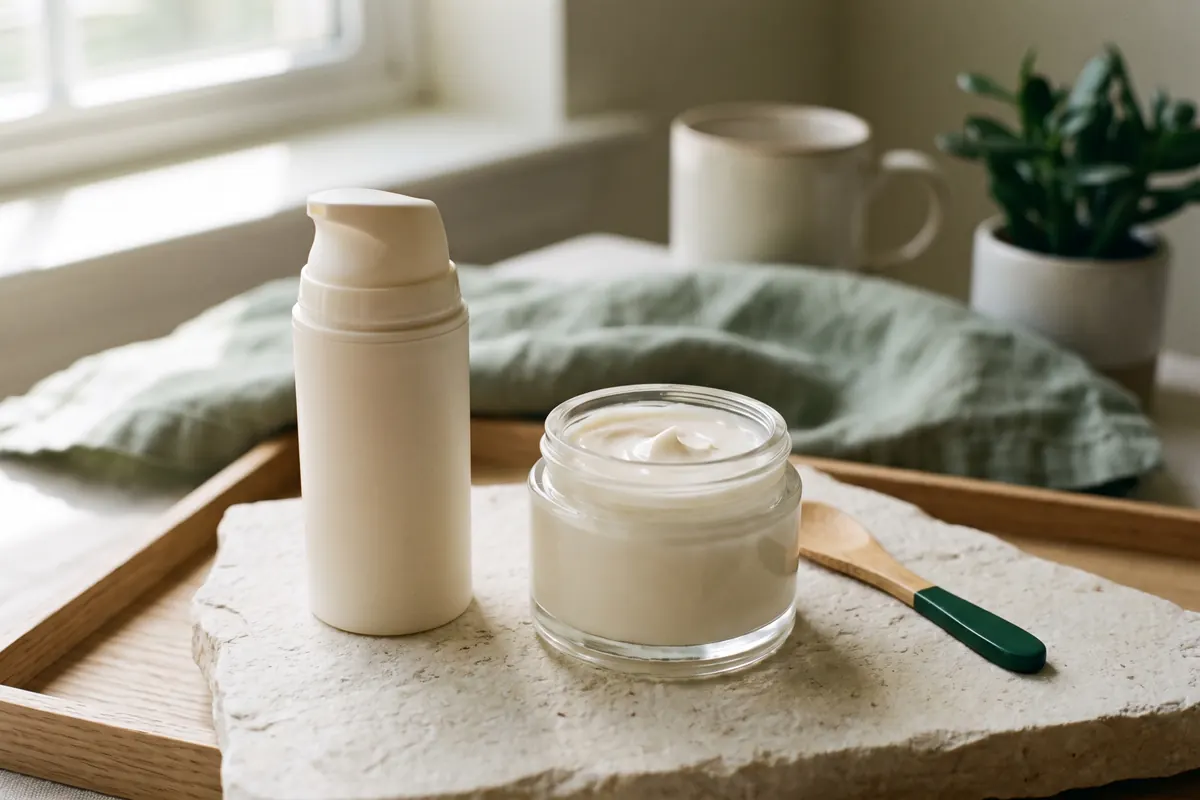
2. A difficult active made gentle. Making a strong retinoid tolerable, or keeping vitamin C stable, takes serious formulation work. Budget versions exist, but they are more likely to sting or do nothing.
3. A texture you will actually use. This sounds soft. It is not. A moisturiser you enjoy goes on every night. One that feels sticky sits in a drawer, and an unused product has zero effect at any price.
Where saving costs you nothing
- Cleansers. On your skin for under a minute, then rinsed away.
- Basic moisturisers. Glycerin plus a simple occlusive does the job at the low end.
- "Hero botanical" products. If the exotic extract has no stated percentage, you are paying for the story.
A quick check before you buy
- Does it stay on the skin, or rinse off?
- Is the active named, with a percentage?
- Is it in opaque, airless or pump packaging?
- Would you actually enjoy using it twice a day?
Four yeses justify a higher price. Two or fewer, and the cheaper option will do the same job. Applied across a routine, this usually lowers the total cost and improves results at the same time.